15 February 2020 – Planting Seeds of Kindness

Through our thoughts, actions, and attitudes, we are constantly planting seeds. What kind of seeds are we planting?

Six years ago I invited people to consider this question.

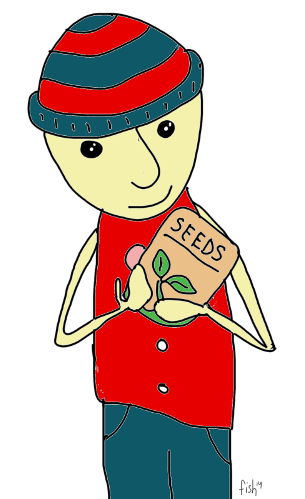
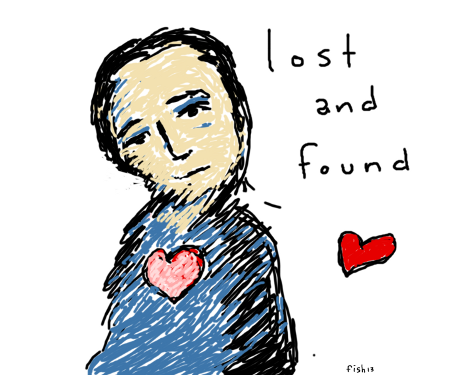
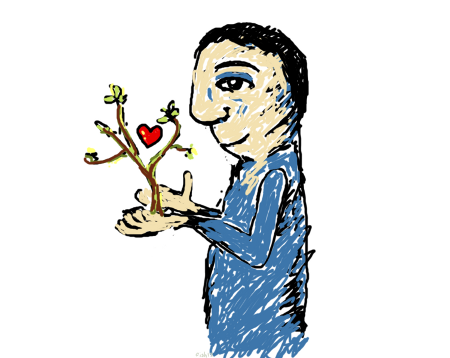
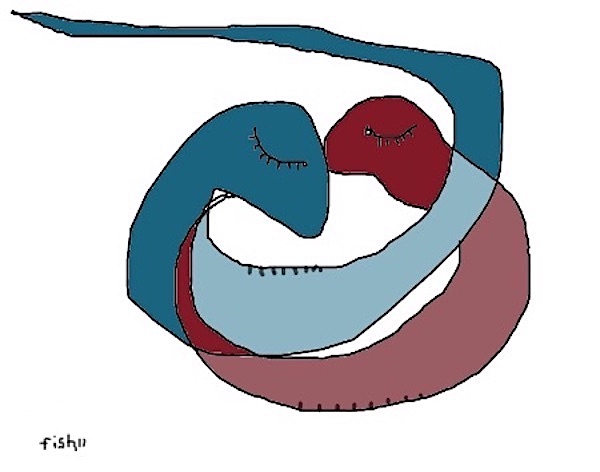
Each day, over ten consecutive days, and using inspiration through original drawings created for this activity by an artist named Fish Astronaut, I encouraged people to complete at least one mindful act of kindness each day.

By mindful, I meant the participants would be well aware of engaging in their acts in response to being involved in this activity. I told them that they could think about them and plan them in advance, or they could come upon them spontaneously. I just wanted them to be mindfully aware of their acts of kindness as they completed them, the mindful part being the fertilizer of their seeds.

Each day, I posted a new image of encouragement. I suggested these drawings were the water and the sun.

For anyone interested, you can access this activity via this link (click on the word “Next” in each posting to access the next day’s drawing).

7 February 2020 – A Simple, Spontaneous Act of Kindness I Learned From My Mom

In another essay, I tell the story of how I suffered from night terrors as a child. I often subtitle that story, “I know the meaning of peace and serenity. It’s your mom lying down next to you and rubbing your back at 2am, moments after being so terribly scared.” 

That subtitle is no small thing for me. While I don’t want to suggest that other people don’t have a deep connection to their mothers, especially my two brothers, there have been moments in my life in which my connection to my mother has a profundity to it beyond description, beyond what I think others may have.

Most of these moments have been in what might best be described as ordinary interactions or activities. It’s like how we used to watch the old TV detective show “The Rockford Files” and seem to get a charge out of Jim Rockford’s humanism.

Then there are countless moments in which she’ll say something with a double meaning but not having initially recognized it. I’ll just look at her and cock my head to the side with eyebrows raised, hopeful that when she hits the rewind button and plays back what she just said she’ll hear the other meaning. 

When she gets it, she will either laugh or yell out a flabbergasted, “Andy!” (assuming she doesn’t first use the beginnings of one of my brothers’ names, “Sc, St, Andy!”). When this happens in front of one or more of her grandchildren, it’s all the funnier. This is especially true if the double meaning is of, shall we say, a mature nature.

Like the time on Valentine’s Day back in 1980 when she pointed at the midsection of my 17 year-old brother who, as a decoration, had attached a construction paper red valentine’s day heart to his belt buckle. In front of a roomful of his friends, including his high school girlfriend, while pointing at his belt buckle, my mother blurted out, “You have a heart on!”

Go ahead, say it out loud while imagining you are pointing at the belt buckle of a post-pubescent male. Hear the double meaning?

If you still don’t get what it sounded like, understand that in the Pacific Northwest we often pronounce our T’s as D’s (this is especially true with double T’s - the city in which I live, Seattle, really sounds like SeaDDle).

Funny stuff, right?

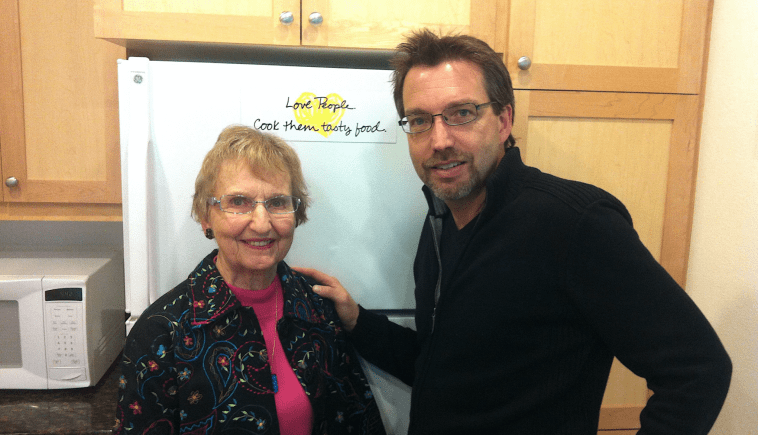
My overall point here is that my mom is super sweet, super nice, and sometimes unintentionally super funny. It continues to be a privilege to be her son.

For most of my adult life, perhaps for all of my adult life, perhaps, even, for my entire life, I have been drawn to what I’ve come to call ordinary acts of kindness. These actions might historically be called being thoughtful or polite or simply nice. And I know I learned this from the example set by my mom.

If you’re lucky like I am, you grew up in a neighborhood in which you had extended relationships with the people who lived near you. Borrowing from Mr. Rogers, it was always a wonderful day in the neighborhood in which I grew up. And I’ve come to think of this as having a lot to do with my mom. 
Ours was the house where the neighborhood kids gathered. Need a casserole, my mom’s got you. Flower baskets on May Day, my mom’s on the job. She was our Den Mother (that’s a Cub Scout reference), and along with my dad was the co-president of the PTA. She made many of our clothes and, I suspect, shared this expertise with Norma, Helen, Jan & Eunice, and any other mom in the neighborhood.

Heck, my parents sponsored the African-American family who moved onto the block in Nebraska where we lived in the 1960’s as part of an integration initiative. They served as godparents when the family’s younger child was born and stood up when a cross was burned on their lawn.

Maybe that act goes beyond the “ordinary acts of kindness” I referenced above. Still, I hope it gets to the core of my parents and, for the purposes of this story, my mom.

After my dad’s employer transferred him, and therefore the entire family, to the Seattle area in 1974, my mom’s altruistic efforts continued. With my brothers and me getting older, she focused more attention on church activities, volunteering as the church librarian and being available to others who needed something.

What’s remarkable about all of this as I reflect on it is that she engaged in her supportive activities with no need of recognition. To her, I think, it wasn’t about being kind or thoughtful or nice, it’s always been about being human.

I found myself thinking about my mom last spring when I was in Oakland with my wife, Melinda. We had moved to the Bay Area several months earlier as part of what some might call a mid-life crisis. I had stepped down from a job I had held for 24 years, the head of a school Melinda and I had founded in 1994. I was trying to figure out what was my next move at age 55. Melinda’s dad had passed away just a year earlier, the first of our parents to have died. He had grown up in Oakland and Melinda was drawn to tracing his roots while getting away from the drudgery of Seattle winters.

So there we were, along with our little dog, Bentsen, in a park in Oakland. I was discouraged from having just heard from a potential employer that the job I had applied for, and for which I felt well-suited, was going in a different direction. I had applied for over a dozen jobs at this point and this was the first one in which I had gotten past the screening process. I was excited by it for a number of reasons, among these being that it was a decent salary with good benefits and I wasn’t going to be in charge of the whole thing.

To relieve my disappointment, Melinda suggested we take Bentsen for a walk and pointed us to a large park on the water in Oakland. It was perfect, like finding an oasis. Bentsen was beside himself with joy, and the way the sun hit the water with a view of San Francisco across the Bay was glorious. Things didn’t seem so gloomy.

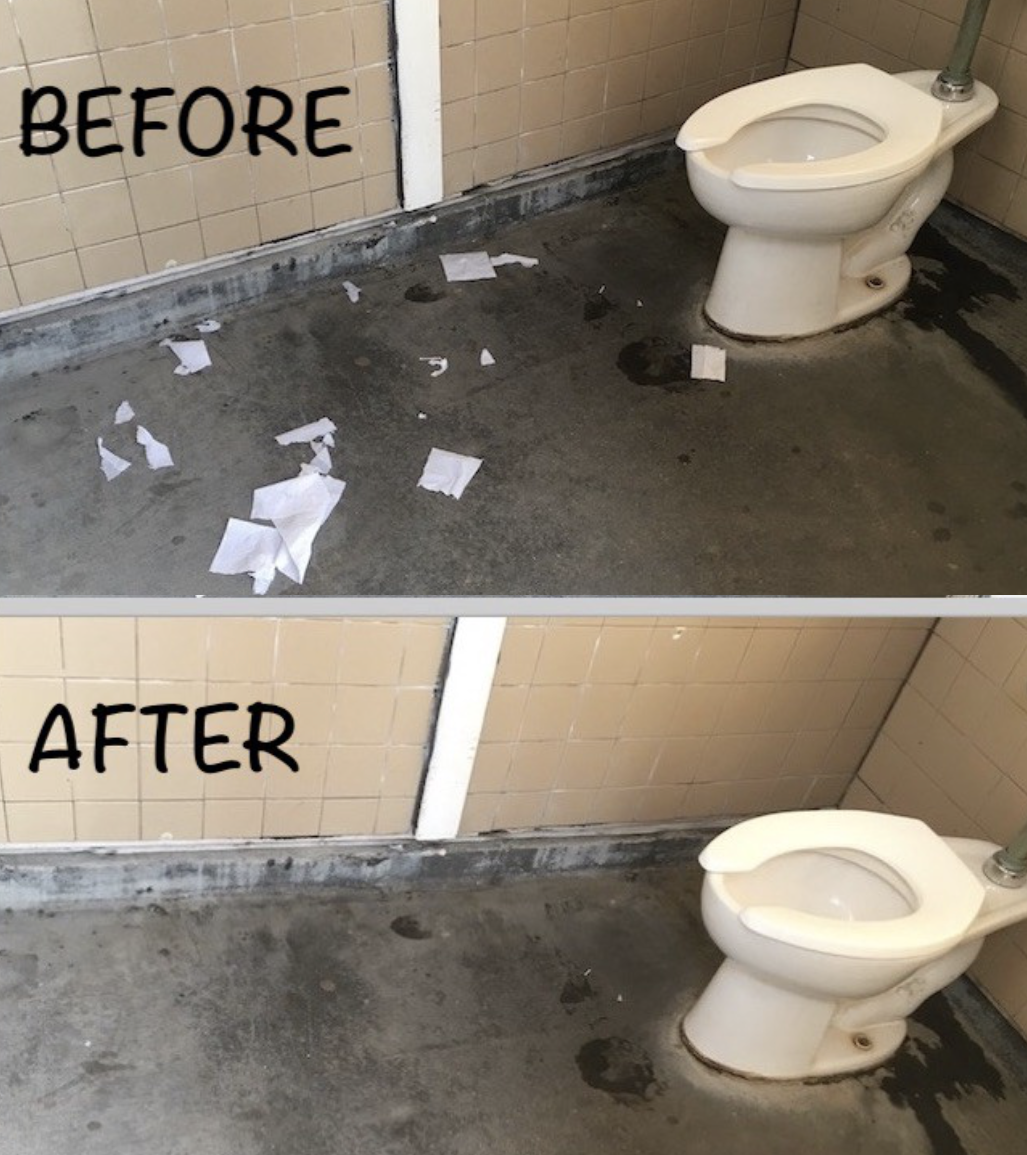
As happens, nature called. I mean, we had been at the park for quite a while and I was trying to meet that eight glasses of water per day protocol. I entered the public restroom in the park. The place was a mess. All over the bathroom were used paper towels and strips of toilet paper.

This is what got me thinking about my mother, who many years ago told me that one of her life practices was to pick up the strewn paper towels in public restrooms as a way to tidy the bathroom for the next person who comes. She said she wipes down the counter, too, making it look better.

Thinking about that, my attention turned to the subject of simple, kind acts people can do. I believe opportunities to complete them are being made available to us all the time, and I mean that literally. There is ALWAYS a kind thing we can be doing, even if it involves something as simple as a thought.
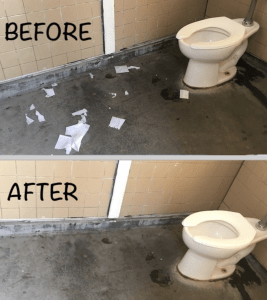
I proceeded to tidy up the bathroom.

In many ways, this was a small action. No one saw me do it and it didn’t take much effort. But maybe it wasn’t so small, after all. And this is where my mom’s example really started to kick in.

Perhaps the next person in that public restroom felt just a tiny bit better for having a cleaner bathroom to use than he would had the bathroom been a mess. He exited the bathroom and moved on to his next event in life in a better mood, treating everyone he encountered a tiny bit better.

Thinking this way, I went on to imagine that this ripple extended further, that those people positively impacted by the man who encountered a clean public restroom were also nicer to others than they otherwise would have been.

Treated nicer, each person on down the line had their moods improved, and so on and so on and so on until everyone in the world was touched.

I don’t think that’s such a ridiculous consideration. It’s also how powerful I think we are, and it can start with the simplest of acts. Like tidying up a public restroom.

So here I am, nearly a year later, writing about this. And I’m thinking about how many positive ripples my mom must have started, and at age 86, continues to start (she’s the building representative in my parents’ retirement community and among the many things she does is make sure everyone’s birthday is acknowledged).

How many positive ripples?

I don’t think there is a number that high.

22 November 2019 – The Importance of a Well-Timed Recommendation

In the spring of 1984, a dear friend named Martha suggested I look into the Big Brothers program, the one that matches men with boys who are lacking positive adult male role models in their lives. It was an interesting time in my life, not unlike now, one in which I was in the midst of a transition. I was 21 years old, working a fun but low-paying and soon-to-be ending job. I was three years removed from high school and not really thinking about college.

I had not heard of Big Brothers and wondered why Martha recommended it. She said something to the effect of, “You’re good with kids and I think you’d get a lot out of it.”

The Big Brothers’ office wasn’t far from my north Seattle apartment so I made an appointment. I still remember the name of the person with whom I met, Cindy Libowsky, who became my caseworker. The process of screening men for a placement is a long one so it wasn’t until August that I was matched with my “little brother,” Matt. I remember my early meetings with Matt as feeling like the stars had come into alignment. I felt good about myself and that I was making a difference in someone’s life. This is what drives me to this day.

Clearly, this recommendation from Martha was life-changing for me. It made clear my calling, that I am here to serve people and that this would begin as a teacher. For the first time, I was drawn to college, now knowing what I wanted to do.

Big Brothers asks its volunteers to commit to a weekly activity lasting 2 to 3 hours with their little brothers. So deeply engaged and having the time available, I met with Matt twice each week for at least that amount of time. On Wednesdays, I brought him to my apartment and together, after a quick trip to the grocery store, we’d make dinner. One night we invited his mom and younger sister, Mica, to join us. Matt was in charge of the dinner and made boiled hot dogs. His mom said it was the best meal she had ever eaten and I think she meant it.

On Sunday afternoons, we’d go somewhere, often to a park, to play. Sometimes I involved other members of my family, one of my brothers, Steve, and his wife, Deb, living close by. My other brother, Scott, joined on a least one of these occasions on a day that included Mica. I can still hear Scott’s voice playfully referring to Mica as “that pesky little girl” during a game of whiffle ball in Steve’s & Deb’s backyard. Scott’s wife at the time, Mary Jo, helped me make Matt a beautiful slot car track for his 8th birthday in September.

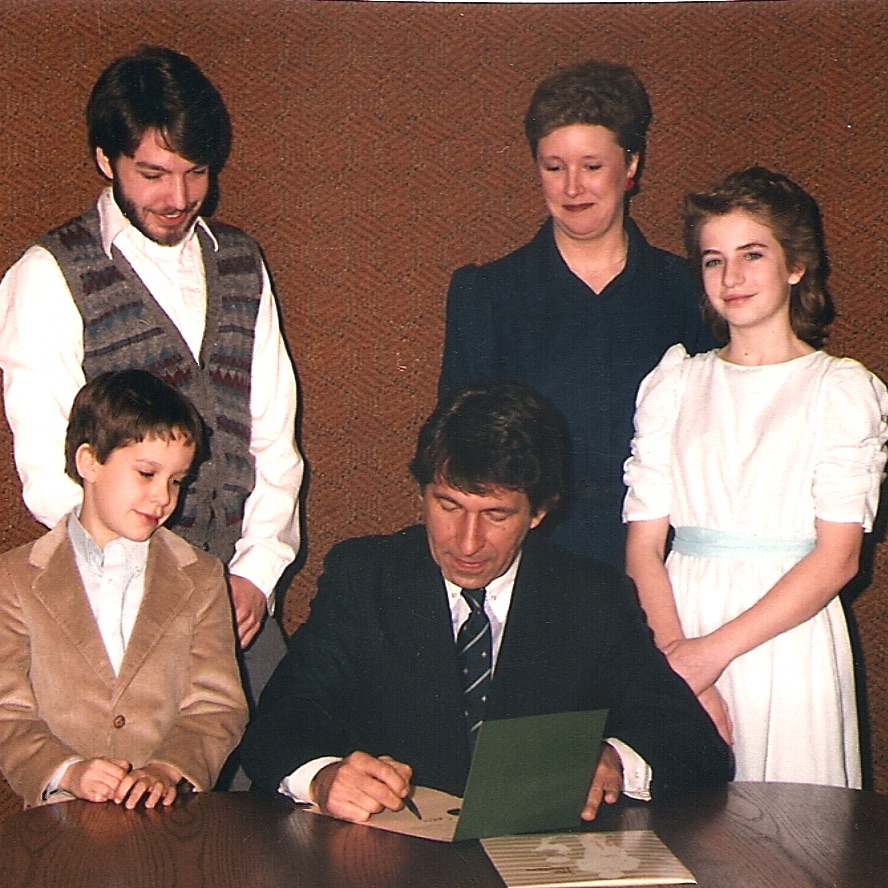
Late in the year, Cindy from the Big Brothers office contacted me to say that Matt & I had been named Big Brother Match of the Year. Publicity pictures were scheduled to be taken with Seattle mayor Charles Royer. I picked up Matt from his elementary school to take him. He was all dressed up and the pride resonated from him as I, his “big brother,” walked into his classroom to take him to meet the mayor.

For those of you who have appreciated me as your teacher, who have appreciated PSCS as a school, and/or appreciated me as a mentor, you can trace it back to Martha’s recommendation.

Becoming a big brother propelled me forward.

1 November 2019 – May I Be Filled With Friendliness

A little less than ten years ago I enrolled in an online class on the subject of Loving-Kindness meditation. I was living in France at the time, on sabbatical with my family, with the goal of coalescing the amount of kindness-based material I had created over the previous 15 years into a book.

The working title of my book was “The Practice of Kindness” and each of my planned ten chapters was going to feature one of the ten lessons I had created for my most popular kindness class, also called “The Practice of Kindness.” I had envisioned the lessons starting at the center of a circle, core, or heart, and moving outward. Specifically, the first lesson was to do something kind for yourself, the second to do something kind for someone you loved, the third to do something kind for a friend, etc. Start inside and gradually move outward.

Significantly, the tenth lesson was to again do something kind for yourself, my hope being that by the tenth lesson the students would have recognized that each act, regardless of how far removed from their center, was also an act of kindness for themselves. In other words, completing acts of kindness, true acts of kindness, is always a win-win. Your recipient is benefited. And you are benefited.

So there I was, on sabbatical in France, working to put together my book on kindness. I enrolled in the online Loving-Kindness meditation class as a supportive activity, something that would help bring focus to my book project. Interestingly, what it did is help me realize that I didn’t want to write a book about kindness. What I discovered I wanted to do was find a better way to promote kindness. I had thought writing a book would do that.

A book, though, is a static thing. Once it’s written and published, it can’t be changed. That’s not what I wanted.

Instead, I built a website, one to which I continue to add content to this day.

If you aren’t familiar with Loving-Kindness meditation, it’s pretty simple to summarize. You sit quietly and silently repeat several phrases, statements like “May I be filled with loving-kindness. May I be happy. May I be safe from dangers. May I be healthy.” How long you sit and how long you silently repeat the phrases is up to you. You even tailor them for you preferred language.

We were told that those who practice Loving-Kindness meditation derive many benefits, some too hard for me to believe literally. Sleeping better certainly made sense, but not being stung by bees, not being bitten by a tiger, and having something catch me if I fell over a cliff were harder to accept.

Still, the concept of reducing conflict and being more consistently at peace made sense to me. And I remembered from watching episodes of my favorite TV show from the 70’s, “Kung Fu” starring David Carradine as a Buddhist priest, that the lead character once walked through a pit filled with rattle snakes without getting bitten because he was at one with them.

At the very least, the benefits provided food for thought.

In my class, as I describe above, we began by speaking in the first person, directing these positive messages to ourselves. As our lessons progressed, the teacher invited us to extend our good wishes to a loved one, then to a friend. One of the many things I appreciated about her guidance is that she said there was no one right way to do this. If we wanted to stay focused on directing loving-kindness to ourselves, that was what we were encouraged to do. As we practiced, we were told, we may feel drawn to extend our good wishes to others. If so, do so. Beyond loved ones and friends, we were invited to consider people we didn’t know well, then complete strangers, then people we didn’t like. If so moved, we could silently send good wishes to people we were mad it, those that have hurt us.

I was thrilled to see the overlap between the meditation class and my kindness class, how the practice started with the individual and moved outward from there. Also like my class, there was the obvious benefit the meditation students received as we extended loving-kindness to others. Of supreme interest, extending loving-kindness to someone with whom I was upset or who I felt had wronged me triggered forgiveness. I learned that resentment exists within me, has a hold on me. Loving-kindness is a way to let go of it.

Like I said, the class was nearly 10 years ago. As it wrapped up, I launched my Kind Living website. And like I said, I continue to add content to it. As to Loving-Kindness meditation, I return to it regularly, finding it to be a great calming and cleansing activity.

What prompted me to write this story, however, is an interview I read with Buddhist teacher Sharon Salzberg earlier this week. Salzberg explained that Pali is the language of the original texts that brought forward Loving-Kindness meditation from the past. She said that there are lots of other English words that could be used for what is most commonly translated as loving-kindness. Love, good will, connection are all acceptable translations.

This got me thinking. Since I first learned of Loving-Kindness meditation, I’ve encountered a lot of people who are turned off by its name. Loving-Kindness sounds too woo-woo, they say, especially in combination with it being a meditation practice. On that note, I know a lot of people think that meditation requires them to sit in an uncomfortable cross-legged position for an extended period of time, their index fingers making a circle with their thumbs, and with their mind being blank.

That’s certainly not my experience. I can’t do that, don’t want to do that. Me, I just try to sit quietly, or lie quietly, and relax.

Anyway, setting the meditation structure aside, it was another of Salzberg’s translations that I started thinking might help the average westerner, maybe the average American, find the practice more approachable.

That translation is friendliness.

So instead of framing it as a meditation practice, what about simply saying to yourself, “May I be filled with friendliness” as you go about your day? If that resonates, you might feel drawn to silently wish your bus driver to be filled with friendliness, the cashier at the grocery store, your partner, your teacher. Maybe the person asking for spare change. Yes, maybe you’ll be drawn to wish the person with whom you are angry to be filled with friendliness.

Imagine everyone on your bus, in your school, around your city all expressing friendliness to themselves and each other. That’s a pretty great place to live.

I know it starts with me.

May I be filled with friendliness…

25 October 2019 – Oral Surgery Teaches Me a Lesson About Wholeness

A little over a month ago my dental hygienist pointed out to me a dark spot that had shown up on the edge of the X-ray she had just taken. She called in the dentist who recommended I have the spot reviewed by an oral surgeon as soon as an appointment could be had.

A few days later, there I was, having a much more complex X-ray taken, followed by a conversation with the surgeon:

That dark spot on my dental X-ray turned out to be a cyst.

“There’s no reason to think this is malignant; in fact, I’m virtually certain it’s a cyst. But it needs to come out.”

“Okay, what does that entail?”

“Well, I’ll detach your palate to open up a space to remove the growth.”

“Detach my palate?”

“You’ll be asleep. When you wake up, you’ll start to swell and have bruising, and the top of your mouth will feel like your worst pizza burn ever. And you’ll have stitches between most of your upper teeth.”

“What about the hole left behind?”

“I’ll fill that with donor bone.”

“Donor bone?”

“Yes, from the bone bank.”

I had gone from a routine teeth cleaning a few days earlier to learning I had a growth in my head that needed to be removed and the hole left behind needing to be filled with donor bone from the bone bank. That’s a lot to wrap one’s mind around. I will say, the surgeon did a great job of answering my questions in a simple and straightforward way. I left her office with the surgery scheduled for her first available opening, about three weeks later.

Two days post-op…

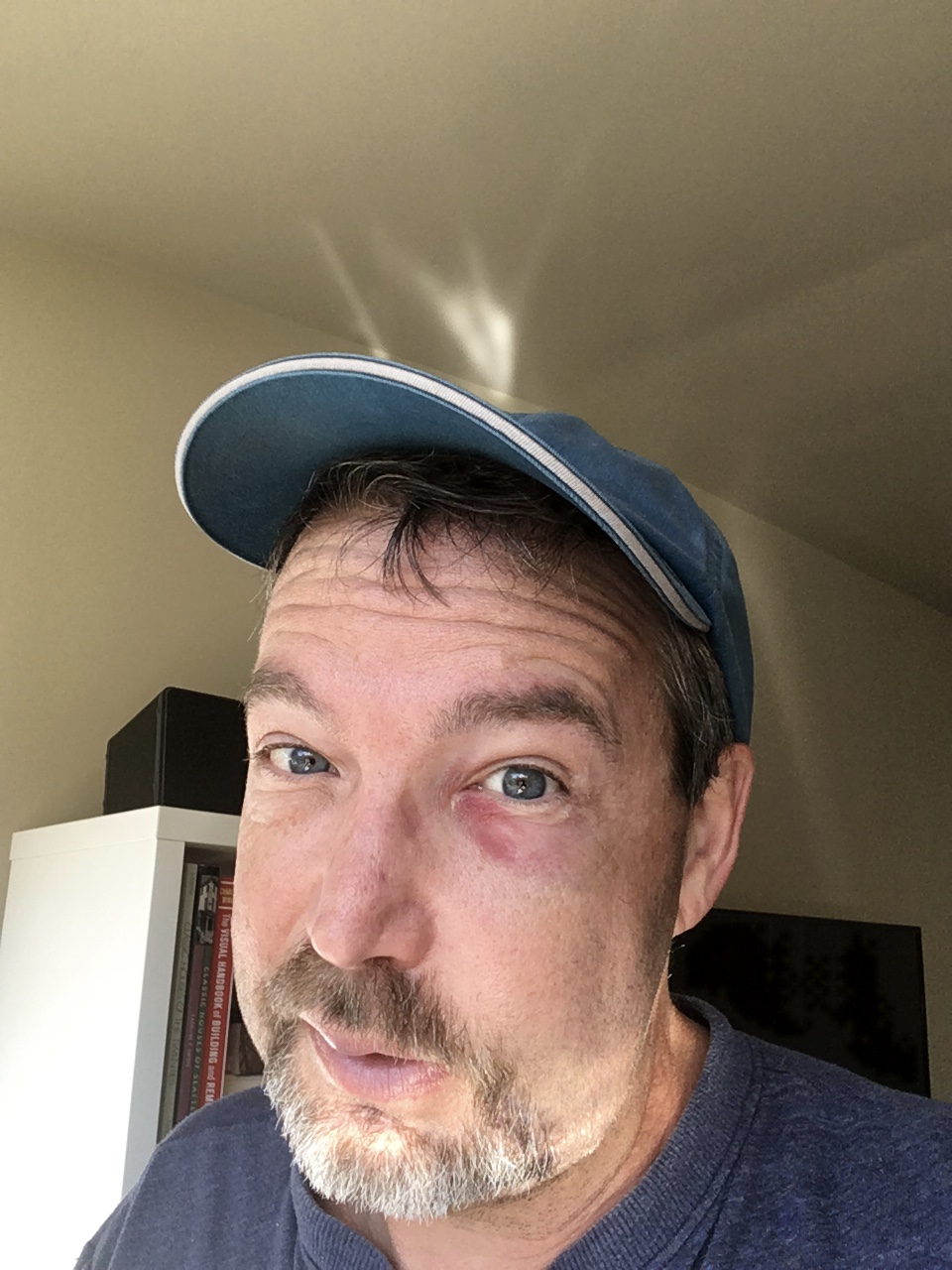
I’m writing two weeks after the surgery, having just returned from my post-op appointment in which the surgeon pronounced me well on my way to recovery. The “pizza burn” has pretty much healed. The stitches have dissolved. The swelling in my face that blackened my left eye and caused it to swell shut is gone. And, most importantly, the pathology report came back as the surgeon predicted, a benign cyst, a nasopalatine cyst to be precise.

She did tell me that mine was odd in how it grew and for its size, the largest she has seen in her career.

A large cyst means a large hole was created. At the post-op visit, I asked her how exactly the hole was filled. I had been picturing that somehow the donor bone would be shaped to fill the hole (bone is hard after all, right?), and that in some clever manner this shape would be squeezed into my face while my palate was detached.

“No,” she said, “the donor bone is actually granulated. It’s like sand, which makes it easy to put in the cavity. Over time, it will solidify and merge with your bone.”

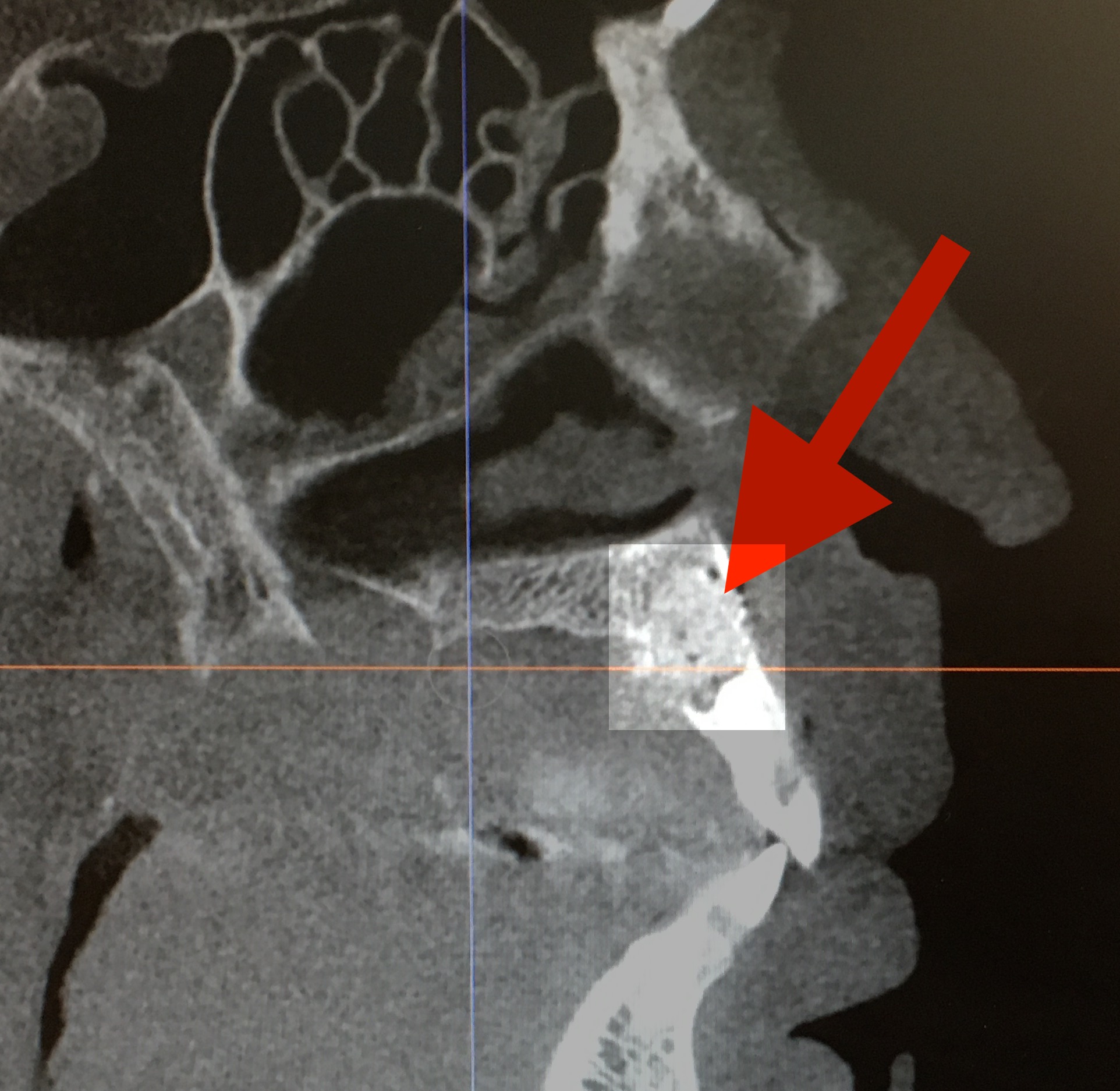
I was fascinated by this, imagining her filling the hole with a sand-like material, maybe using a funnel, like I do to fill the pepper mill. She showed me an X-ray she took after the surgery was completed and while I was still unconscious.

The rounded section inside the highlighted area is filled with granulated donor bone.

“There, that round spot is where I put the granulated bone. You can kind of see how it looks a little different than the area around it.”

“Can you tell me more about the donor bone, where it came from, that sort of thing?”

“Well, there are people who donate their bodies to science. Among the different ways these bodies are used include harvesting bones. What we used in your surgery came from what we call the bone bank.”

I found this supremely interesting but didn’t know what else to say. I mentioned that I had this vague recollection of talking to her after the surgery, asking her if I could find out who the donor was so I could thank this person’s family (and maybe know whose bone was at that moment starting to merge with my face).

She laughed, “Yes, you did ask about that. We really have no way of knowing.”

And with that, there was no more to say other than pleasantries. I thanked her for her good work and left the office, a place close enough to where I live that I could easily walk home.

Outside, it was overcast with a bit of drizzle, a pretty stereotypical fall day in Seattle. One foot in front of the other, looking down at the sidewalk, I was still thinking about the donor. I pictured a person making arrangements to have their body donated to science. I wasn’t sure how this happened, if there was some governmental office one goes to in order to make this arrangement or something more simple, like how I’m listed as an organ donor on my driver’s license.

I also started thinking about this as an act of kindness, kindness being a topic to which I’ve devoted a great deal of my life. In the early 90’s I offered what is likely the first online kindness class, and I’ve only expanded my offerings from there. I keep an archive of what I’ve created, all available for free, at kindliving.net.

Several years ago, responding to requests from several of my kindness students scattered throughout the world, I created a class I called “Anonymous Kindness.” Scheduled over ten weeks, each Sunday night I posted an “assignment,” a suggestion for a kindness act that the participants would complete anonymously over the next week. A couple of days later I would send them a message designed to stoke their thoughts and enthusiasm, what I called a message of inspiration. And I ended each week by providing them a summary message, one reflecting on my thoughts about that week’s assignment and their responses to it, which by then they were to have posted to our class website.

It was a wonderful experience for me and, I think, for most of the several dozen participants.

An early assignment had to do with completing at least one and ideally several small acts of kindness. I suggested that opportunities to complete these often come upon us spontaneously, like allowing a driver to merge in front of us, returning grocery store carts to the store, cleaning up paper towels in a public restroom, that sort of thing.

Now, as I was walking home from the oral surgeon’s office, I thought about how simple, how small, of an act it was for me to have checked a box on my driver’s license form to become an organ donor. I wondered again about the donor of the granulated bone in my face. How simple, how small, of an act was it for them to have done something that started a chain of events that led to their bone becoming part of my face, part of me?

It was both small and magnificently huge.

This is the point that I made in my reflection message the week of the “small kindness act” assignment, that we actually will not know how big of an impact our small acts might have. Waving a driver to go in front of you could change their whole demeanor. They may feel more apt to be kind, thoughtful, to someone they see. And then on and on. One small act leads to many small acts that together change the world.

That’s The Butterfly Effect applied to human action.

The back of a sign I saw on my walk home.

A smile, which just a few days earlier I couldn’t manage because of the swelling, came over me. I touched my tender cheek, the space above where the granulated bone was placed, and imagined the donor. At one point this person was alive and went for a walk, the bone in them aiding in their movement. Now that bone was in me.

Whose bone is it, I wondered.

It’s theirs, it’s mine. It’s… it’s, and then an epiphany, it’s ours.

It’s our bone.

And if it’s our bone, then everything is ours, meaning everything is to share. It’s interconnectedness. It’s wholeness. It’s oneness.

Turning onto my block, I had a little chuckle, given I like to play with words. A pun had dawned on me, one that also carried for me profound meaning. The oral surgeon had filled the hole in my face, which had led to me experiencing interconnection and oneness.

The pun?

Filling the whole.

20 August 2019 : God Wrote Back

I don’t spend a lot of time thinking about the existence of God, but I do believe we live in a benevolent universe. Take this story for example:

4 year-old Meredith wrote a letter to God about the death of Abbey, her family’s beloved dog, wanting to make sure God recognized the arrival of Abbey in heaven. She stamped the letter and, with her mom’s help, dropped it in a mailbox. A couple of weeks later, the family arrived home to find a package on their porch. Someone in the post office had taken it upon her/himself to provide Meredith with an answer.

Among the many things I like about this story is the little girl not being the least bit surprised that God wrote back to her. Something about that makes perfect sense to me.

Read the whole story, including both letters, here.

12 August 2019 : Just What is a Flaw Anyway?

Can anything be beautiful without it having a flaw? Put another way, is it the flaws that make something unique, even beautiful? Seen in this light, is there such a thing as a flaw?

You may be familiar with the phrase, “a Persian flaw,” the concept of which has to do with purposely adding a mistake into one’s work to demonstrate humility, that one is not perfect. It comes from ancient Persian rug makers who spent years weaving rugs of magnificent beauty. Deeply religious, they believed only God could be perfect so they weaved a flaw into each of their beautiful rugs.

The concept of purposely weaving a flaw into one’s rug fascinates me. In adding the flaw and by doing it on purpose, is it really a flaw? Superficially, yes, I suppose. The rug, as a rug, has a flaw. But considered more deeply, in adding the flaw on purpose as an expression of humility, the flaw has meaning. It’s an intended part of the rug. In fact, it helps define the rug. It IS the rug. I bet that over the years, it’s the most talked about part of the rug.

I’d go so far as to say that an intended flaw isn’t a flaw at all.

Transfer this now on to humans, specifically onto our bodies, our thoughts, our behaviors. In all three areas we have flaws, right?

Think about it. What don’t we like about ourselves? Can the shape of my nose be flawed? Am I flawed for lacking patience when my 2 year-old won’t get on her shoes and we’re late for her great-grandmother’s memorial service? Am I flawed for getting angry at nearly hitting a pedestrian who stepped in front of my car outside of a crosswalk? What else?

What if these so-called flaws are Persian flaws, existing for a reason? What might this reason be?

Is it to teach me humility, remind me that I’m not perfect and should therefore not expect perfection in others? Is it to provide me something to work on, to grow from, to better myself, knowing I will never be able to “fix” everything? Seen this way, then they are not flaws at all but an important part of who I am.

To consider this concept further, take a look at this short film.

4 June 2019 : Dang, Leon Redbone Died

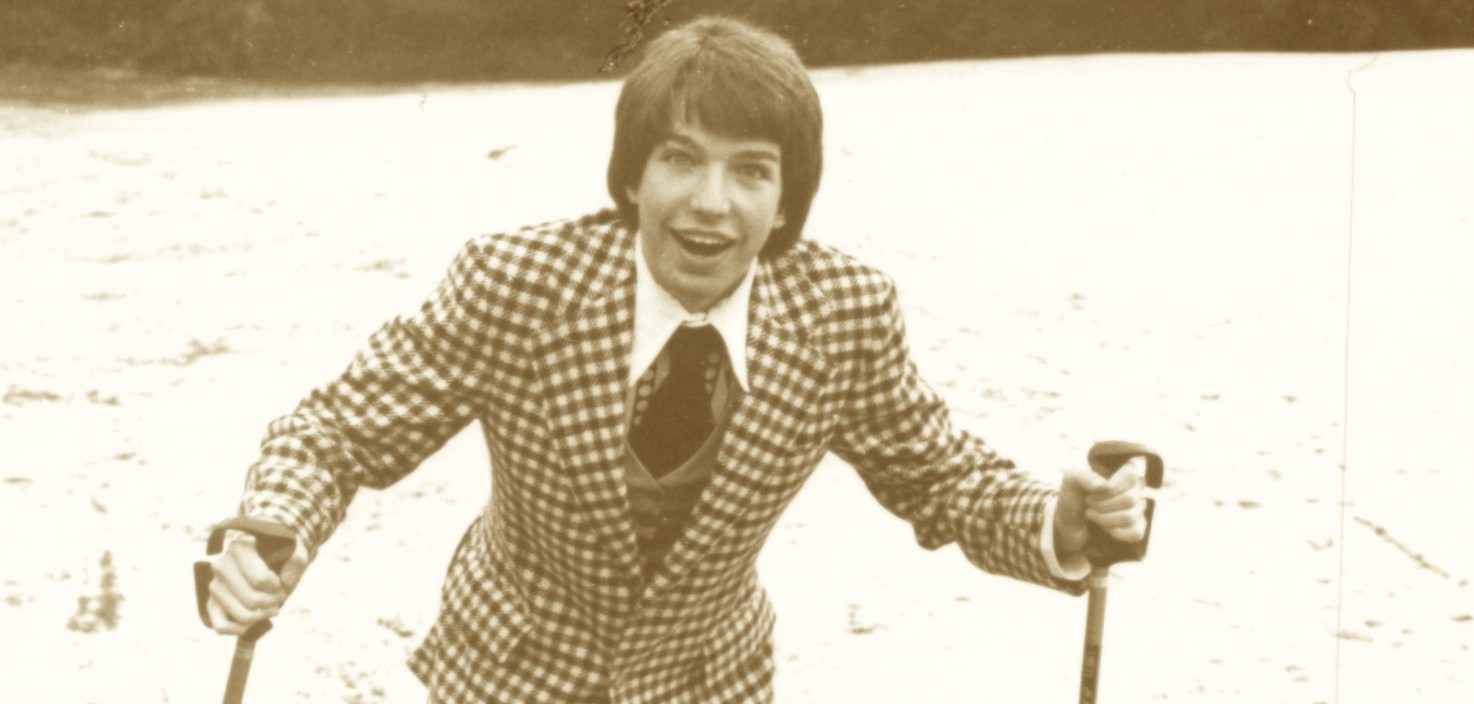
Yup, that’s me, age 17.

I was 17 years-old in 1980 and somewhat of a loner. I worked as a clerk in a bookstore that summer and briefly dated a freshman in college on a gymnastics scholarship. I had stopped imbibing in the whiskey and vodka available at the weekly poker parties at a friend’s, something that distanced me from most of my closest friends. High school seemed like a waste of time but it never occurred to me that I could just quit and do something else.

The third of three boys being raised by loving and hard-working parents in a middle-class suburb of Seattle, I found myself in the shadows cast by my academic all-star older brothers. More often than I can remember, I was referred to by one of their names by teachers they had impressed, one teacher going so far as to admit his surprise that I might have thoughts of my own.

In other words, it was hard to find something that was solely mine.

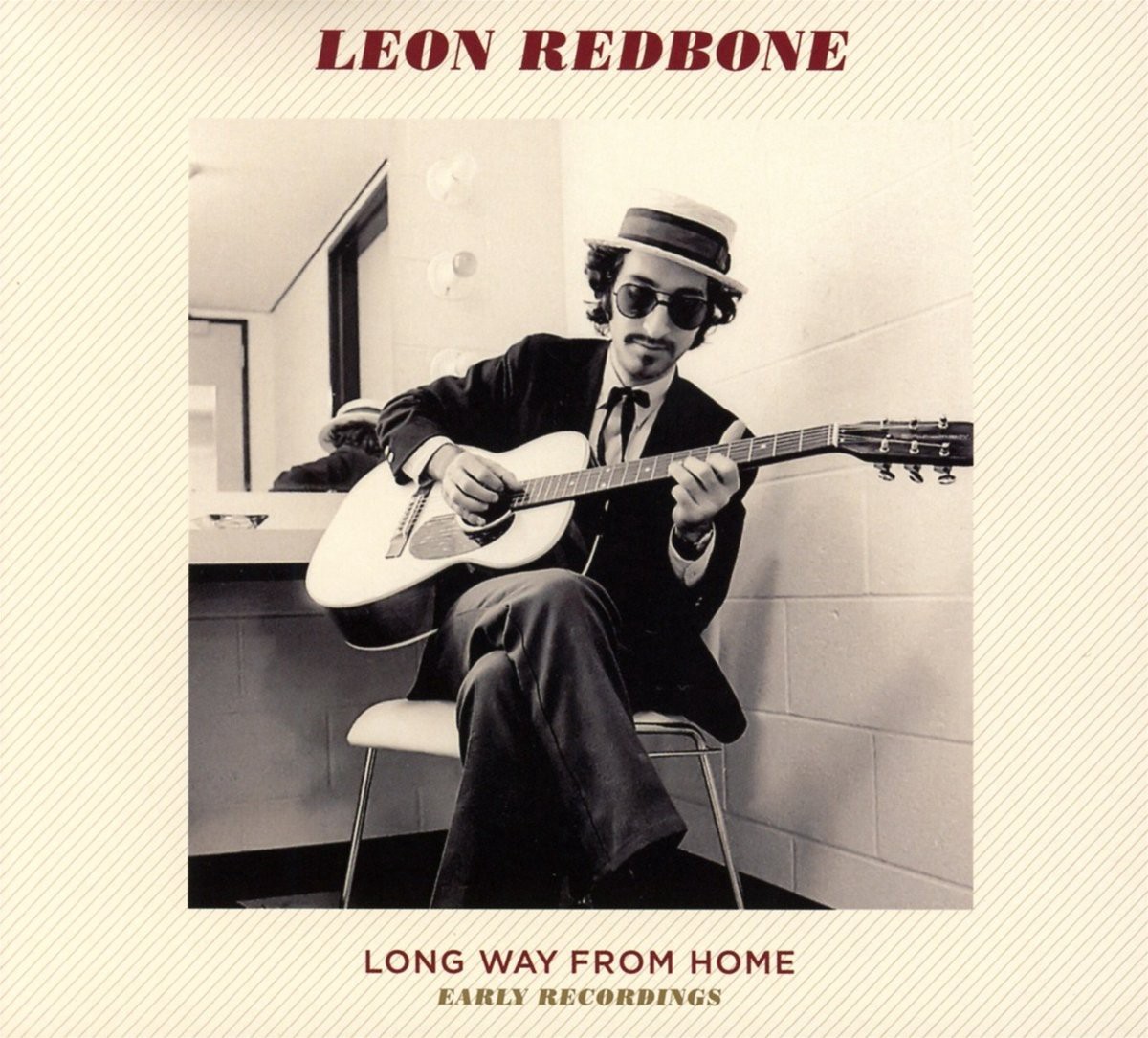
Enter Leon Redbone.

I was channel surfing one night and saw him on some program, probably a Saturday Night Live rerun. I was smitten. Mostly at that time I listened to what others were calling punk rock, although my interests were never as hard-edged as that. While I was drawn to the emotion and anger in punk, I liked things a little more melodic. I sang along with Elvis Costello’s ballad “Alison” more than anything by The Damned, for instance. And while my brother was wearing out his copy of “Never Mind the Bollocks,” I’d just as soon listen to “Sh Boom” by The Crew Cuts as anything by The Sex Pistols.

Watching Leon that night, it was like someone had made this moment for me. Here was a musician who sang old songs with respect and talent, but with an overall irreverence that I think was what drew me to punk. To borrow an overused phrase, he was singing my tune.

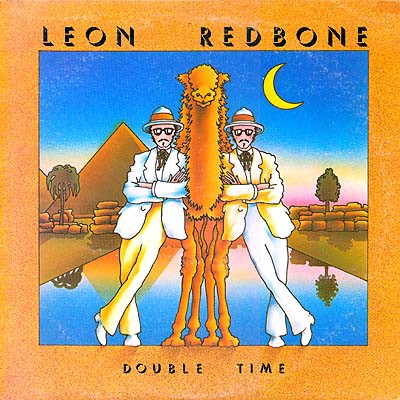
The next day I went to Tower Records in search of Leon Redbone records and found two, “On the Track” and “Double Time,” available in the “Nice Price” section, meaning they were on sale. I bought them both and hustled back to my bedroom at home, anxious to drop the needle on the vinyl. “Sweet Mama, Hurry Home or I’ll Be Gone” is the first track on that first record of Leon’s and thus began my introduction to what turns out to be dozens of classic songs from the American songbook.

Just 17 years old, I hadn’t heard of most of them, so imagine my surprise when my mom overheard “Ain’t Misbehavin'” and made reference to it. She said something to the effect of, “That’s a strange version of that song.”

Later that summer, my paternal grandparents came to visit and I put “Double Time” on in the family room. My grandfather, who would die of cancer two years later, making me think this was the last time I saw him, was both confused and amused by Leon’s version of “Sheik of Araby,” which I remember thinking was as much a random recording of sounds as anything done by a punk rock band.

September came and the start of my senior year, which to my delight was delayed by a teacher’s strike. My girlfriend returned to college and we drifted apart, letters not being enough to sustain the relationship. I upped my hours at the bookstore. My friends kept up the drinking and I went to fewer and fewer parties.

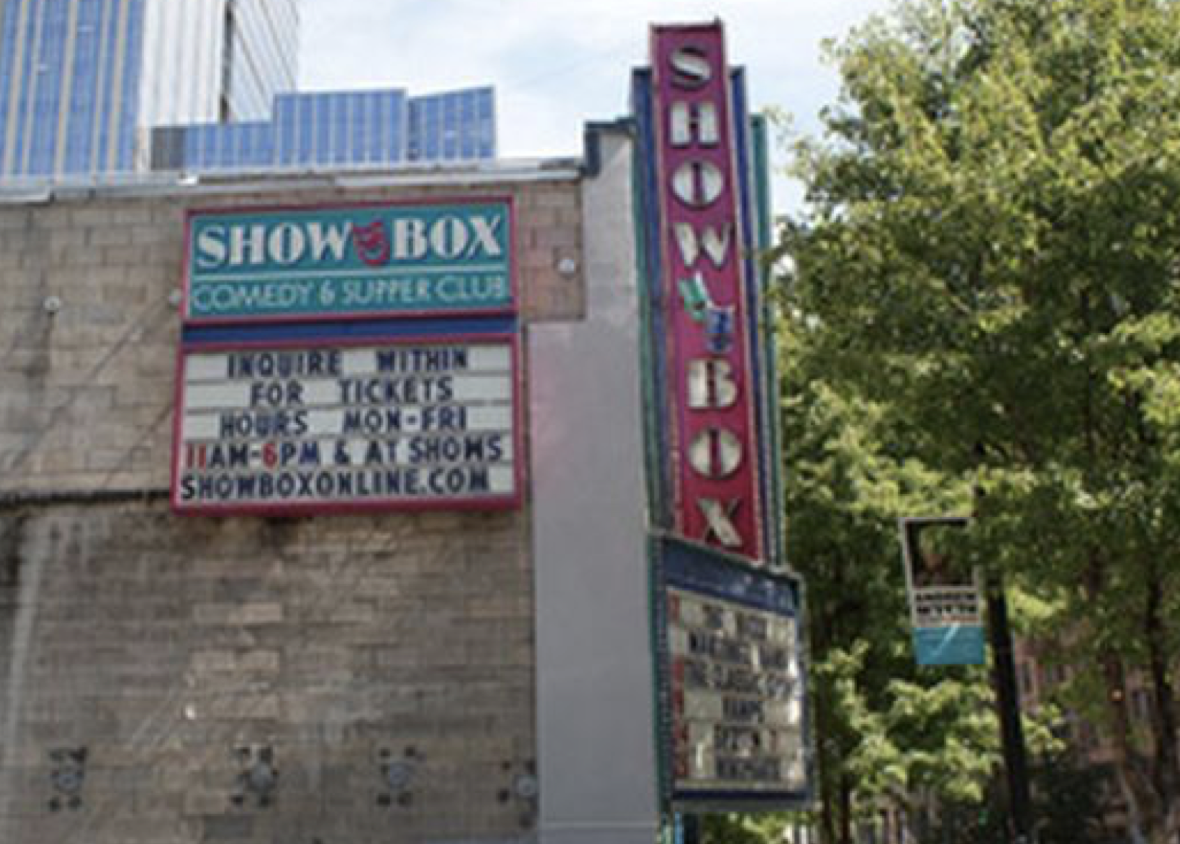
I read somewhere that Leon Redbone was coming to Seattle, scheduled to play the Showbox on First Avenue, not far from Pike Place Market. This is the same venue where a year earlier I had seen my first show, Squeeze, with a group of friends. My eyes had been opened to downtown Seattle street life at night that included scantily clad women in picture windows beckoning passersby. Excited to attend the show and nervous to go by myself, I tried in vain to find someone to go with me. Ultimately, I bought my ticket and the night of the show drove across the floating bridge alone into Seattle.

Sticking out in my memory is that I drove what was considered to be my mom’s car, a 1980 Pontiac Phoenix hatchback. I remember this car as being the first front-wheel-drive car I had driven and, having a 4 cylinder engine, having no punch. Looking back, it was probably the perfect car for this 17-year-old suburbanite to drive into the heart of the big city to see Leon Redbone perform. I remember having to parallel park and then walking to the venue.

This was the first time I had walked by myself at night in Seattle. Other times, I would be with friends or family so I felt both small and grown up at the same time. I also recognized that this experience was mine alone. Those big brother shadows, which by now I learned I could also hide in, were nowhere to be found. I arrived at the Showbox, past the beckoning women in windows and x-rated theaters, to find a line forming outside. I took my place and soon a brown paper bag was being passed up and down the line. Clearly, the bag held a bottle and the camaraderie of the concert-goers involved sharing. When it reached me, I passed it along rather than drinking from it, something I’ve often thought about since.

Would I have exploded if I had taken a sip?

The line began moving and after showing my ticket at the door I found myself inside. I remembered the venue from the Squeeze show and having recently seen Devo there, but this was different. There was no stage and the floor had a few dozen metal folding chairs scattered about. That was it. People were taking seats so I did the same.

After what seemed like a long wait, the “opening act” appeared, someone who I swear I had seen busking on a street corner outside just moments before. He played a few songs and then the “second act” came on, a band I don’t remember at all. After that, there was a bit of a break. And then onto the floor came Leon.

Wearing dark sunglasses and a fedora, along with a thick mustache and sideburns, he held a guitar in one hand. He paused halfway across the floor, then turned to the audience, doffed his fedora, and said hello, or what I thought was a hello. Throughout the night, he more mumbled than talked. I decided he had a speech impediment and that I shouldn’t question it. Besides, he was a great showman and I was absolutely mesmerized by his guitar playing. Halfway through the show, he paused to take a picture of us, the audience. I still remember the flash of the camera bulb and wondering if he kept a scrapbook of pictures like this.

I don’t recall how long he played but I know I didn’t want him to stop. Seeing him in person and alone was something more than a little perfect in my life at that time.

Leon was mine.

This morning I learned that Leon Redbone died last Thursday. I’m sad about it, recognizing the passing of someone who marked a leap forward in development for me.

Thanks, Leon. You came into my life at just the right time.

21 May 2019 : The Tao of Kindness

I’ve long been drawn to the beauty and simplicity of the Tao Te Ching, or the Tao. It consists of 81 short verses and includes such well known phrases as “A journey of a 1000 miles begins with a single step.” The lessons are pithy and the meaning often elusive. As such, it is often translated and interpreted.

I trace my interest in the Tao back to 1982 when I was living in a radio station in Alaska (yes, that’s a story unto itself). One of the two TV stations I had to watch was WGN out of Chicago and on Sunday nights they aired episodes of the 1970’s TV show “Kung Fu.” It was from watching that show that I got interested in eastern philosophy, something that has stayed with me since.

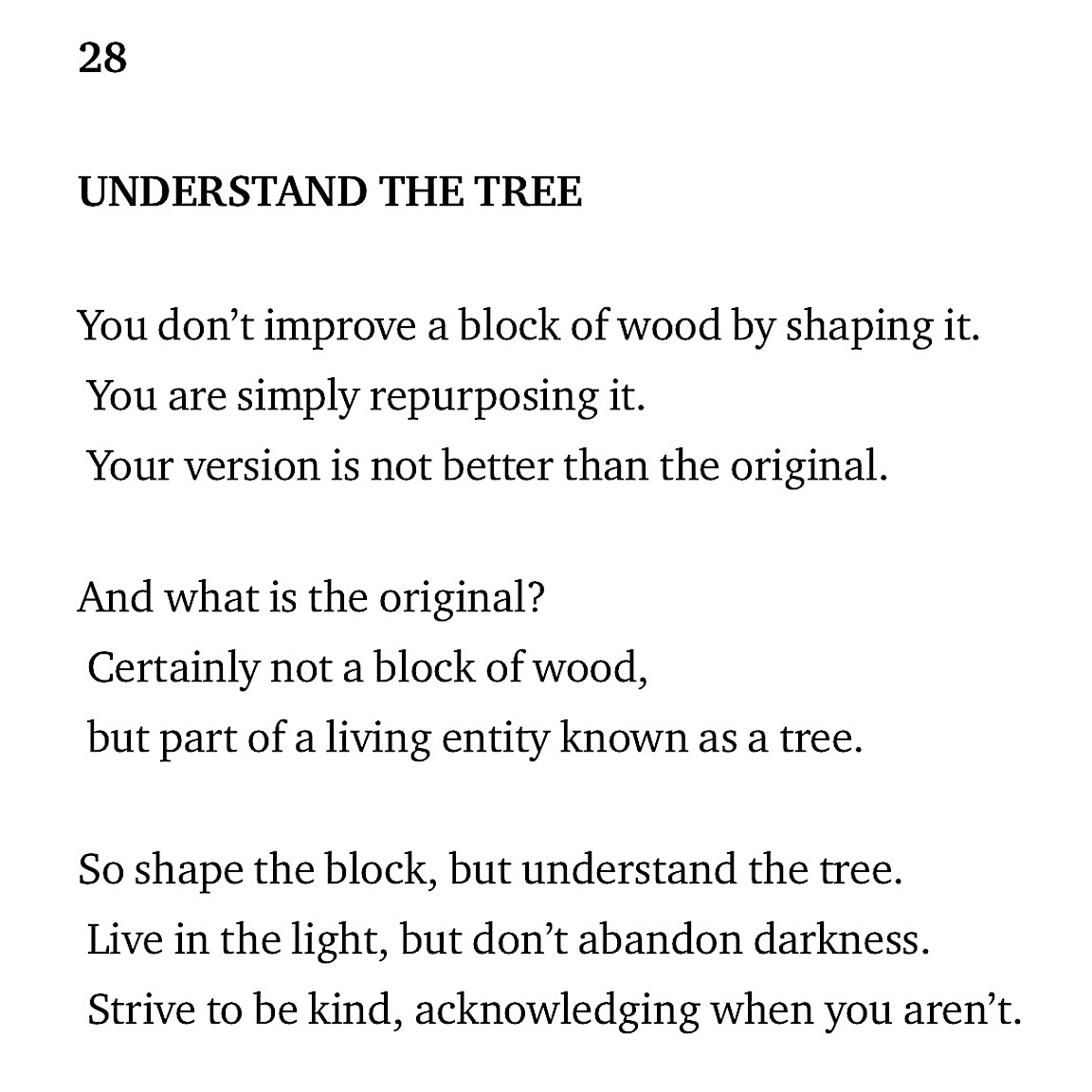
Each week, I’m adapting one of the 81 verses of the Tao Te Ching into a kindness-oriented poem. I stress that I am adapting the verses, not translating them, although it would be equally valid to say I’m writing kindness poems inspired by the Tao.

I started posting these on Facebook, Twitter, and Instagram every Friday a few months ago, and an online friend publishes them on her publication called “Change Your Mind, Change Your Life” on Medium. I also archive them on the Kind Living website.

What prompted me to share this is it seems the poems have started getting a following. People on Facebook pass them along and share with me that they look forward to seeing them each Friday. Hits to the Kind Living website have a tenfold increase on most Fridays.

Included below is a recent poem that got picked up by the curators for poetry on Medium, meaning it was featured on their site. As such and because of Medium’s system of paying authors, I’ve made over $5 for it!

So how about that?! I’m a paid poet.

20 May 2019 : Drawings For a Kindergartner’s Lunch

Heartman was my alter ego, the superhero part of myself that would go on with his day while my real self, “a small man,” missed Melinda. When our oldest daughter, Chloe, was a kindergartner in 1998/99, I brought Heartman back.

Each morning I quickly drew on a Post-it note a comic involving Heartman and put it in Chloe’s sack lunch. Each image had something to do with what I had recently done, often with Chloe, and with Heartman waving to her and saying, “Hi, Chloe!”

The school Chloe attended had a policy in which students were not allowed to share items in their lunches, nor were they allowed to throw anything away. The idea was for parents to have a clearer sense of what their children were and were not eating. It also meant sorting through some nasty lunch remnants at the end of each day.

On the positive side, most of my Heartman comics made it home each night. I couldn’t bring myself to throw them out with the uneaten apple wedges and sandwich crusts. Instead, I stashed them away.

Several years later, I found a sandwich bag filled with the drawings and created a scrapbook of them. If nothing else, I would have them as a reminder of the sweet project. It turns out that the drawings serve as a great reminder of what was happening in our family’s life back then. I also thought that Chloe may want them some day. Given she’s about to complete graduate school and has been hired to be an elementary school counselor next fall, you’d think they’d be right up her alley.

In the summer of 2013, Melinda and I had the opportunity to visit some friends in France. One afternoon we visited the Museum of Modern Art in Paris and saw a Keith Haring art exhibit. I was inspired by the exhibit to scan my little drawings and present them online as a way to preserve and share them.

That fall, I created the Heartman Comics blog.

I posted the drawings on the blog in the order in which I drew them, something demonstrated in how the later ones are much better than the earlier ones (ever see those first animations of the Simpsons?).

In total, there are 112 drawings plus two bonus drawings when Chloe tried her kindergartner hand at making Heartman comics of her own. All in all, it’s a pretty darn sweet collection of day-to-day parenting.